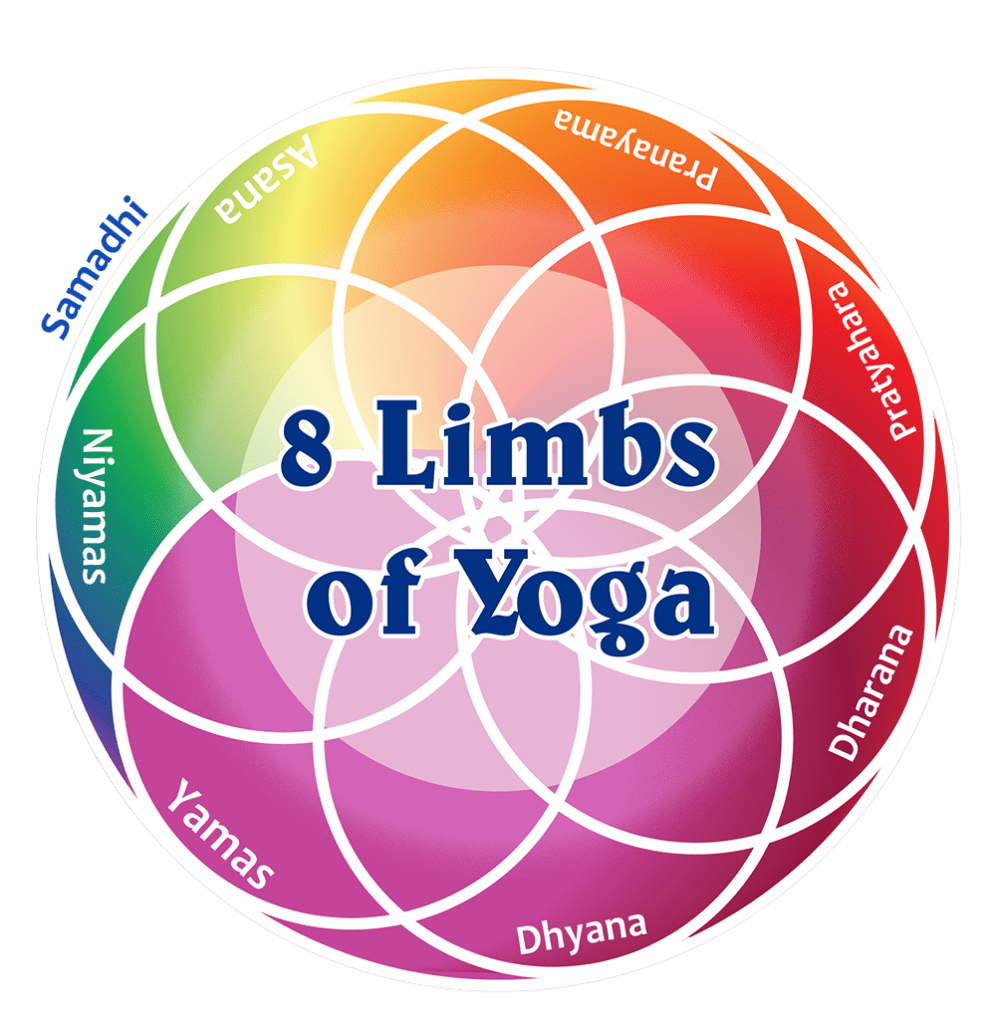
The yamas are sometimes known as the external disciplines. Though the Eight Limbs aren’t practiced in numerical order, the yamas and niyamas are seen as the first steps toward personal liberation and enlightenment. Before we can begin the work of cultivating inner peace, we must learn to live in harmony with the world around us.

The first limb of yoga is the yamas. There are five yamas:
- Aparigraha- non-greed
- Ahimsa- nonviolence
- Satya- truthfulness
- Asteya- non-stealing
- Brahmacharya- pure conduct
Ahimsa- Is it the Most Important Yama?
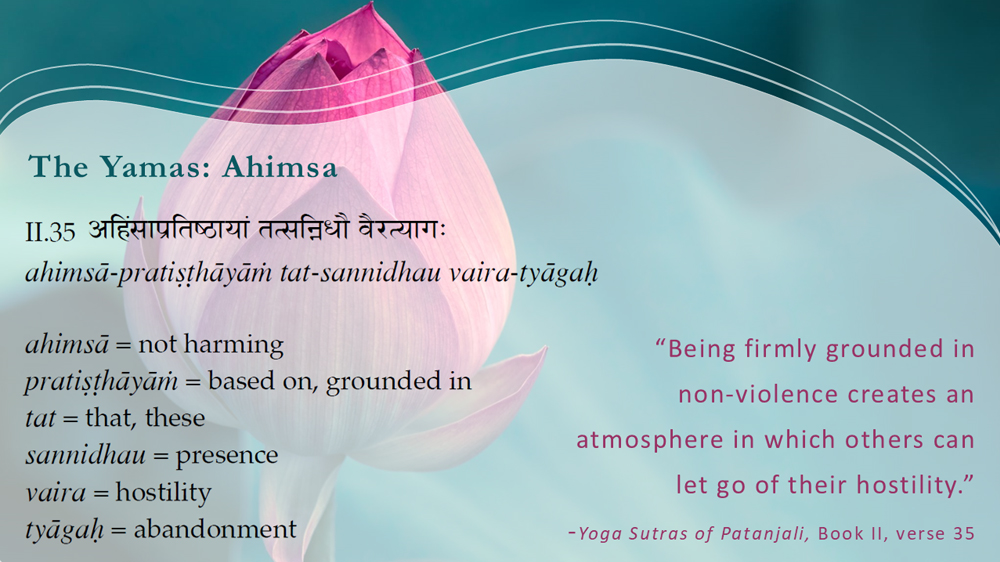
–Yoga Sutras of Patanjali, Book II, verse 35
The first yama is nonviolence. “Ahimsa” translates as “himsa” = hurt, and “a” = not. Ahimsa is the practice of non-violence in all aspects of life. Physically, we do not bring harm to others, ourselves, or our surroundings. Mentally, we avoid negative thoughts about others and ourselves. When we practice ahimsa, we strive for a peaceful existence which can encourage others to live peacefully as well. Ahimsa can sometimes be seen as the foundation of the rest of the yamas.
Satya- Honesty is the Best Policy (Mostly)
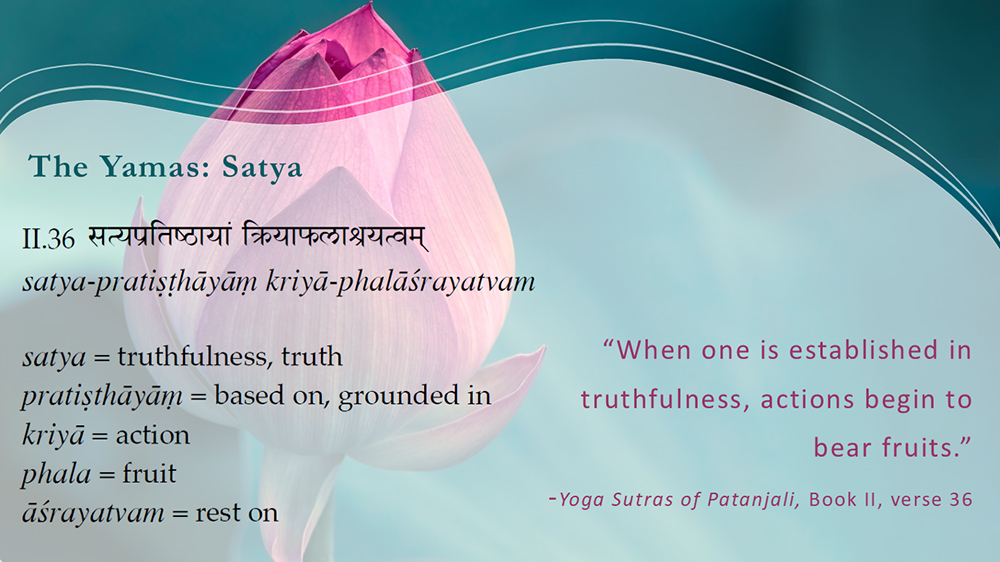
–Yoga Sutras of Patanjali, Book II, verse 36
“Satya” translates to “truth or essence.” This yama is mostly taught as restraint or self-control, asking each of us to slow down and think before speaking. Truth is rooted in nonviolence and satya is in harmony with ahimsa. When you move through life, living and speaking your truth, this can lead to positive outcomes.
**A note about satya** Ahimsa comes before satya for a reason. Words can hurt. If what you are about to say can cause harm, don’t say it. From the Sufi mystic / poet, Rumi: “Before you speak, let your words pass through three gates: Is it true? Is it necessary? Is it kind?”
Asteya- Does it Belong to You?
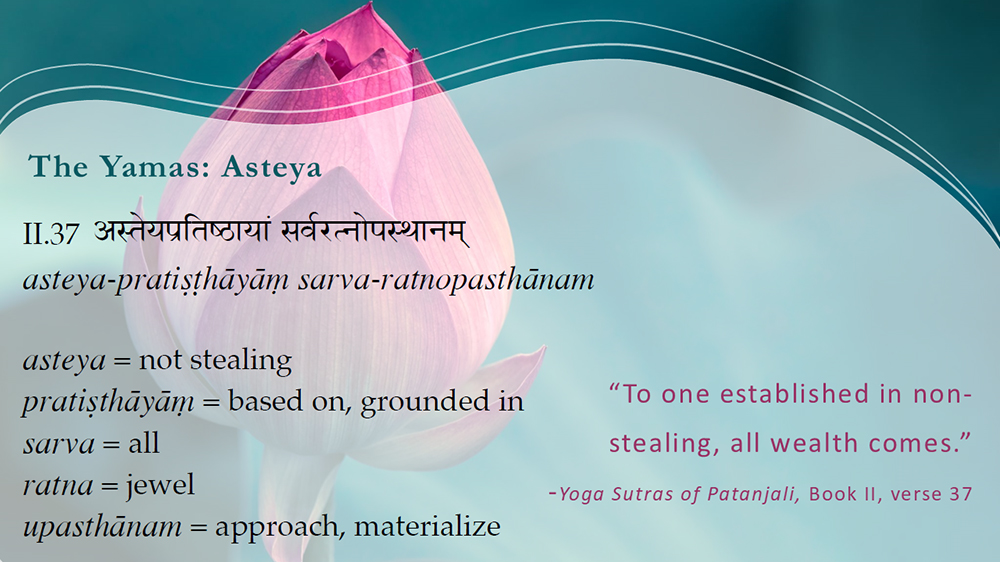
–Yoga Sutras of Patanjali, Book II, verse 37
“Asteya” translates to “non-stealing” (“steya” = practice of stealing, “a” = non). In it’s most basic definition, asteya means do not take things that do not belong to you. However, going past the physical, it is also a reminder to aim for harmony in life with those around you. A life where we do not seek competition, domination, or want more than or covet what our neighbor has. Also, tearing others down emotionally for our own benefit is a form of stealing.
Brahmacharya- Using Your Energy
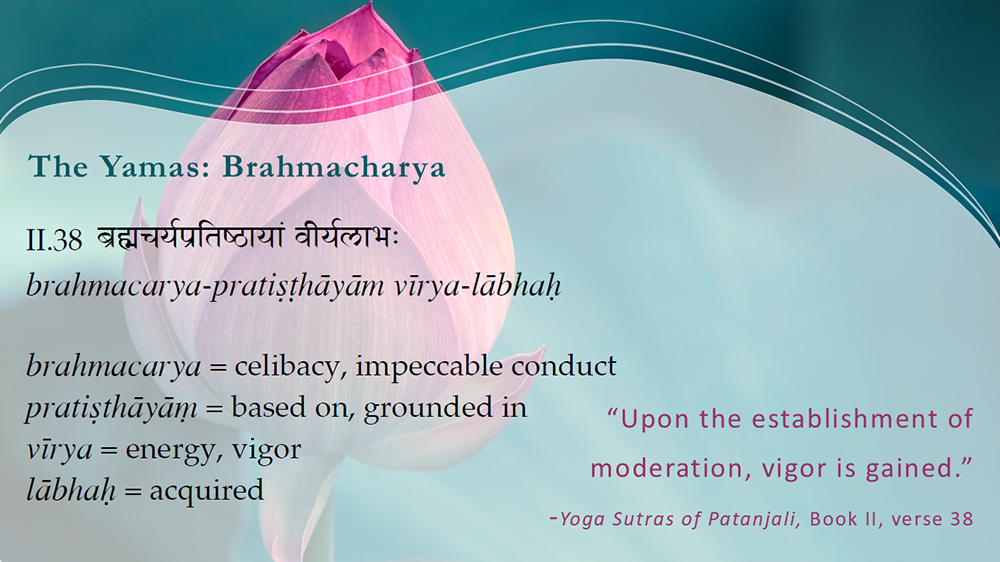
–Yoga Sutras of Patanjali, Book II, verse 38
Classical texts and interpretations translate this yama as chastity or being celibate. Modern translations define it as the “right use of energy.” Essentially, we practice brahmacharya when we direct our energy toward more positive behavior. “Brahmacharya” can be broken down into “Brahma,” who is a god of creation in the Hindu religion, and “charya,” which means “behavior.” Examples of divine behavior could be mindful consumption, self-restraint, and saving your energy for personal growth and meaningful activities.
Aparigraha- Take Only What You Need
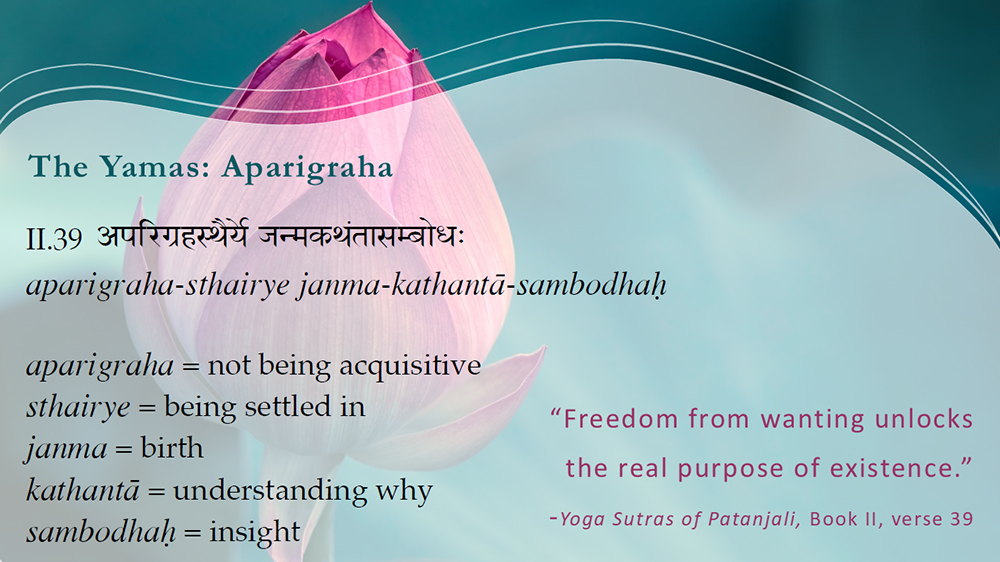
–Yoga Sutras of Patanjali, Book II, verse 39
Much of our modern world is centered on consumerism. Aparigraha might be one of the more difficult yamas to practice. “Aparigraha” is often translated as non-greed and/or non-attachement (“a” = non, “pari” = on all sides, “graha” = grab, take, seize). We are encouraged to focus on what we need and not accumulate things we do not. Beyond physical needs, aparigraha also encourages us to focus on the present and not be worried about the future (which could lead to hoarding things we do not need).
Together, these five yamas offer a guide for how we relate to the world and to ourselves.
The yamas invite us to live with greater awareness, compassion, and intention. Though they may seem simple at first glance, each one offers a deep well of insight that can reshape how we show up in the world. As we begin to embody these ethical principles—from nonviolence to non-attachment—we lay the foundation for a yoga practice that is rooted not only in movement, but in mindful living. This is the heart of yoga: transformation that begins from the outside in.
If you want to get occasional newsletter updates from me, sign up here: http://eepurl.com/iXhQ3g






 I'm Coach Rose
Leave a comment